Our Egypt itinerary for 12 days covers Cairo, Abu Simbel, a 4 night Nile cruise and three days on the Red Sea without rushing a single site
Our Egypt itinerary for 12 days covers Cairo, Abu Simbel, a 4 night Nile cruise and three days on the Red Sea without rushing a single site
Twelve days in Egypt is the length where the trip stops being a checklist. Our itinerary runs Cairo for 3 nights (Giza, Saqqara, Dahshur, the Grand Egyptian Museum, Coptic and Islamic Cairo, Khan el Khalili), a domestic flight to Aswan for Philae, the High Dam and a Nubian village, a dawn drive to Abu Simbel, then a 4 night Nile cruise downstream to Luxor with Kom Ombo, Edfu, the Valley of the Kings and Karnak on the way. A private car then crosses the desert to Hurghada for 3 nights on the Red Sea, and a domestic flight returns you to Cairo for the final night. It starts the moment you land, with our own guides and drivers throughout.
Why 12 days is the length that finally fits Egypt
Most first trips are built around 7 or 10 days, and both leave something out. Seven days in Egypt is Cairo plus a short cruise, with Abu Simbel squeezed in or skipped. Ten days gives you Abu Simbel and a full cruise, but the Red Sea becomes a one night afterthought.
Twelve days keeps everything from the 10 day plan and adds three real nights on the coast, where the only decision is snorkel trip or hammock. It also buys recovery: Egypt is a walking, sun and early alarm destination, and lazy ship days plus beach days mean you land home rested instead of wrecked. Still deciding? Our guide to how many days you need in Egypt compares every option from 4 to 14.
The 12 day Egypt itinerary at a glance
This is the route as we run it, starting the day you land in Cairo. Every night is in a hotel or on the ship, no overnight trains, and you head to the airport the morning after day 12.
| Day | Where you sleep | What you see |
|---|---|---|
| 1 | Cairo | Arrival, airport meet and greet, an easy evening by the Nile |
| 2 | Cairo | Giza Pyramids and the Sphinx, Saqqara, the Red and Bent pyramids of Dahshur |
| 3 | Cairo | Grand Egyptian Museum, Coptic Cairo, Islamic Cairo, Khan el Khalili at dusk |
| 4 | Aswan | Domestic flight to Aswan, Philae by boat, the High Dam, sunset in a Nubian village |
| 5 | Ship, docked in Aswan | Dawn drive to Abu Simbel, back for lunch, board the ship, felucca at sunset |
| 6 | Ship, docked in Edfu | Sail to Kom Ombo, the double temple and crocodile museum, on to Edfu |
| 7 | Ship, docked in Luxor | Temple of Horus at Edfu, the Esna lock, Luxor Temple lit at night |
| 8 | Ship, docked in Luxor | Valley of the Kings, Hatshepsut, Colossi of Memnon, Karnak in the afternoon |
| 9 | Hurghada | Disembark, private car across the Eastern Desert, first swim before dinner |
| 10 | Hurghada | Full day snorkel boat trip on the reefs off the coast |
| 11 | Hurghada | Rest day, optional sunset quad ride into the desert |
| 12 | Cairo | Morning flight to Cairo, a last museum or bazaar, hotel near the airport |
Days 1 to 3, Cairo and the pyramids
Day 1, arrival
Our representative meets you inside the terminal, helps at the visa desk and walks you to the driver. Land before noon and we add the Egyptian Museum on Tahrir Square or a first walk through Khan el Khalili. Land late and it is dinner and sleep.
Day 2, Giza, Saqqara and Dahshur
We start early to get onto the plateau before the coaches. Your guide walks you from the Great Pyramid down to the Sphinx, then a short drive to Saqqara for the Step Pyramid of Djoser and the painted tombs of the nobles, which most visitors miss and almost everyone names as the highlight of the day.
After a late lunch we finish at Dahshur, where the Bent Pyramid and the Red Pyramid stand almost alone in the sand. Going inside the Red Pyramid is free of crowds and hard on the thighs.
Day 3, the museum and the old city
Morning at the Grand Egyptian Museum, beside the plateau, where your guide picks a route through the Tutankhamun galleries so you see the pieces that matter without museum fatigue. The afternoon moves to Coptic Cairo for the Hanging Church and Ben Ezra Synagogue, then Islamic Cairo. We walk Al Muizz Street as the light goes gold and end in Khan el Khalili when the lanterns come on. A full day, but flat walking.
Days 4 and 5, Aswan and Abu Simbel at dawn
Day 4, fly south, Philae and the High Dam
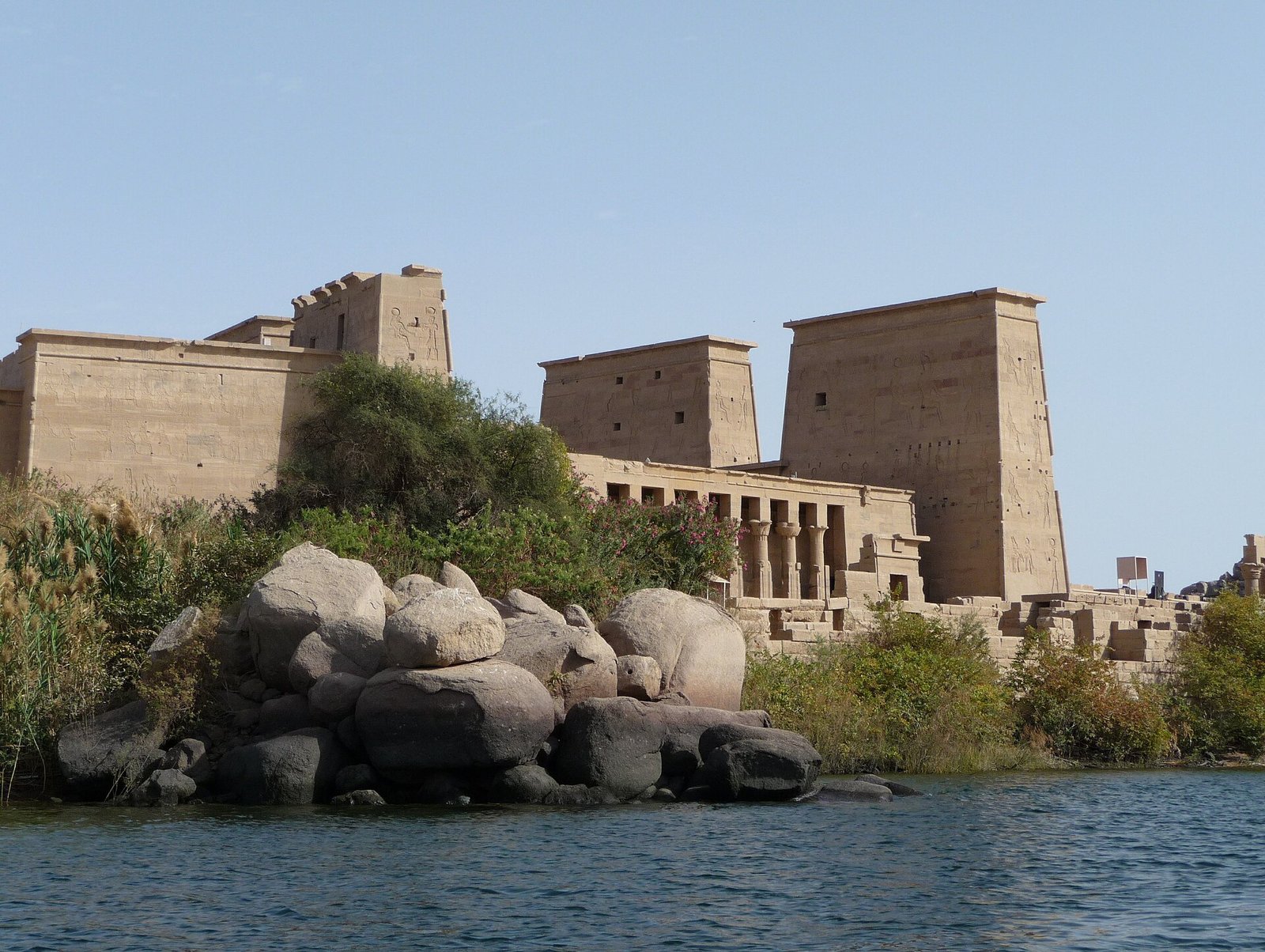
A morning domestic flight from Cairo to Aswan takes a little over an hour and drops you into a different Egypt: dry air, a wide blue river, a slower pace. Your Aswan guide takes you to the High Dam, then to the dock for Philae, where the temple of Isis sits on an island and the motorboat ride is half the pleasure.
Late afternoon we take another boat to a Nubian village for painted houses, hibiscus tea in a family home and sunset over the dunes. The night is in an Aswan hotel, not on the ship, and that is deliberate.
Day 5, Abu Simbel before breakfast
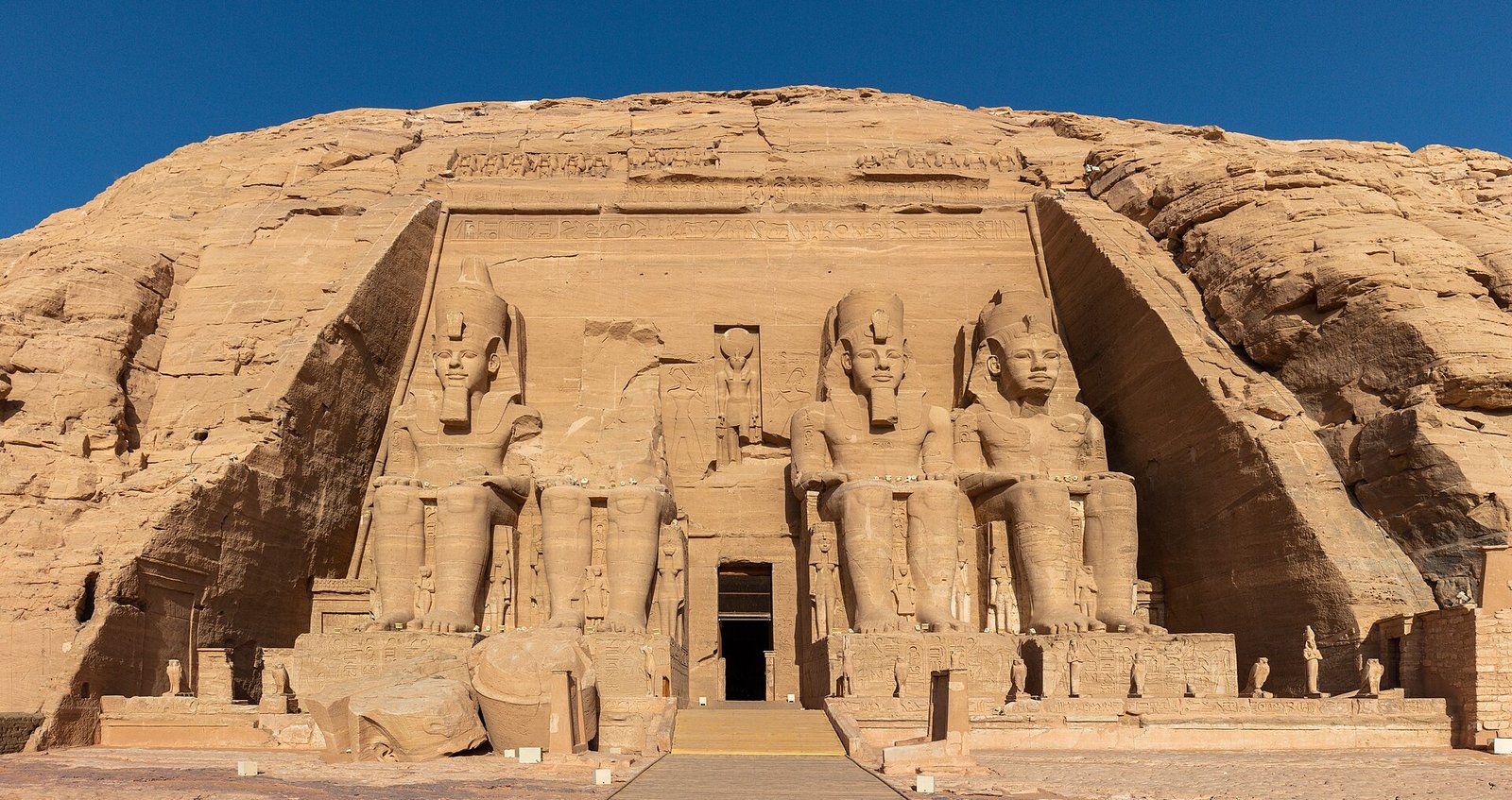
The alarm goes off around 4 in the morning. Your driver has coffee in the car and the road south runs straight across the desert for a little over three hours. You arrive as the temples of Ramesses II and Nefertari catch the first sun, before the day trip buses fill the site, and you are back in Aswan by early afternoon.
Because you slept in a hotel, the ship's sailing time is not your problem. You board, have lunch on deck and spend the late afternoon on a felucca around Elephantine Island. Our guide to visiting Abu Simbel covers road versus flight in detail.
Days 5 to 8, the Nile cruise from Aswan to Luxor
Four nights on the river is the heart of the trip. The ship is your hotel, restaurant and transport, and the temples arrive at the gangway. A 4 night sailing is one night longer than the standard 3, and that extra night makes the Luxor days calm instead of frantic. Our Nile cruise guide explains how ships, cabins and sailing days work.
Day 6, Kom Ombo and Edfu
The ship leaves Aswan in the morning and you spend the first hours on the sundeck watching the banks slide by. Kom Ombo comes after lunch: a temple split between the crocodile god Sobek and the falcon god Horus, with a museum of mummified crocodiles next door. You sail on to Edfu and sleep there.
Day 7, Edfu and the Esna lock
A horse carriage takes you from the dock to the Temple of Horus, the most complete temple in Egypt, with its roof still on. Back on board, the ship passes the Esna lock and reaches Luxor by late afternoon. After dinner we walk Luxor Temple under the floodlights, when the columns look their best and the heat has gone.
Day 8, the West Bank and Karnak
Early start, because the Valley of the Kings is a bowl of rock that heats up fast. Your guide chooses three tombs that are open and uncrowded, with Tutankhamun or Seti I added if you want them. Our page on Valley of the Kings tickets and tombs explains which extras are worth it.
Then Hatshepsut's terraced temple against the cliff and the Colossi of Memnon. Lunch on the ship, then Karnak in the softer afternoon light. The Hypostyle Hall is the most overwhelming space in Egypt and we save it for last.
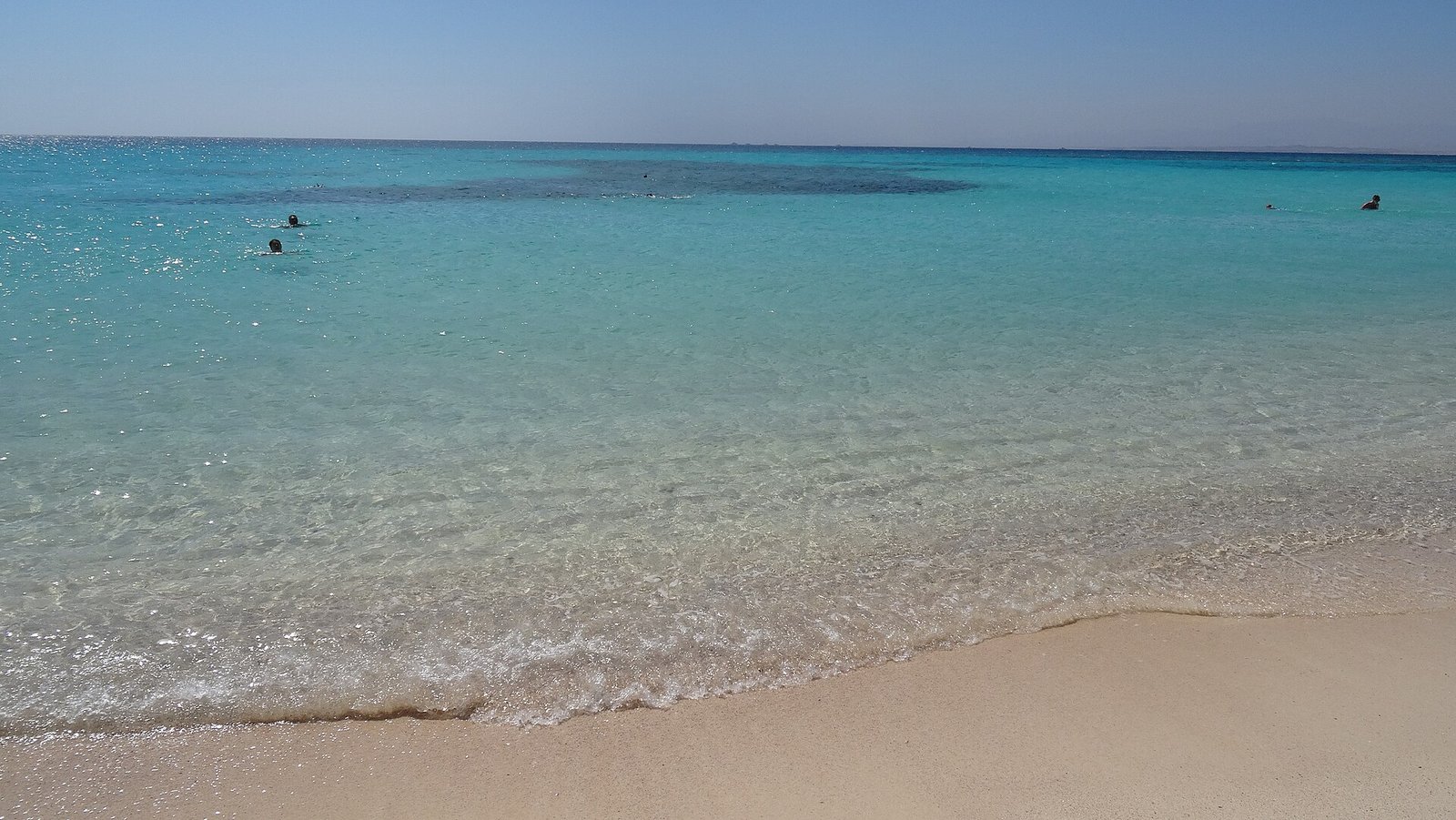
Days 9 to 11, the Red Sea from Hurghada
Day 9, over the desert to the coast
You disembark after breakfast and your private car heads east through the Eastern Desert, climbing through bare mountains and dropping to the sea in about four hours. You check into a beachfront hotel by early afternoon and swim before you finish unpacking.
Day 10, the snorkel trip
A full day on a boat out to the reefs and islands off Hurghada: two or three snorkel stops over coral gardens, a barbecue lunch on board and, in the right season, dolphins. You do not need to be a strong swimmer; the crew hands out vests and the water is calm inside the reef. Our list of excursions from Hurghada has the other boat options, including a glass bottom boat.
Day 11, a rest day with an optional sunset
Nothing is scheduled. Sleep late, read by the pool, walk the marina. If you want one more memory, a late afternoon quad ride into the desert behind the town ends with tea in a Bedouin camp at sunset.
Day 12, back to Cairo for the last night
A morning domestic flight from Hurghada to Cairo takes about an hour. We book a hotel close to the airport so the next morning is painless, and the afternoon is yours: the Tahrir museum if you skipped it on day 1, the National Museum of Egyptian Civilization for the royal mummies, or Khan el Khalili for the gifts you decided against on day 3. Ending in Cairo also means far more onward connections.
Why this order works
We have run this route in every order. This one wins for four reasons.
- Abu Simbel from a hotel, not from the ship. Cruise ships leave Aswan on a schedule. Do the dawn drive on sailing day and you spend the visit watching the clock, and any delay on the road means the ship waits or you miss it. Sleeping in Aswan the night before removes the problem.
- Sailing downstream, Aswan to Luxor. The Nile flows north, so the ship covers the distance with less engine time, and the temples get bigger as you go: Kom Ombo, then Edfu, then Luxor and Karnak. The Valley of the Kings is the right finale to the ancient half of the trip.
- Beach at the end, not the start. The first eight days are early alarms, dust and stairs. Three days by the Red Sea afterward is a reward. The other way round, you start tanned and end exhausted.
- The Luxor to Hurghada road. The one place where driving beats flying. Four hours door to door beats any connection through Cairo, and you never backtrack.
Three swaps we make often
A 12 day frame is flexible. These are the changes travelers ask for most.
| Swap | What changes | Who it suits |
|---|---|---|
| Dahabiya instead of a cruise ship | A sailing boat with a handful of cabins, no engine noise, and stops at islands the big ships pass. Departures are usually weekly, so the calendar shifts around it. | Couples, small groups, anyone who wants silence on the river |
| Alexandria instead of one beach day | Drop day 11 on the coast and add a day trip from Cairo on day 12: the catacombs, the Roman theater, the library and seafood on the corniche. | History lovers, second time visitors, anyone bored by beaches |
| Sinai instead of Hurghada | Fly Luxor to Sharm el Sheikh instead of driving. Better diving, a night climb up Mount Sinai, and Dahab for a slower vibe. The road transfer becomes a flight. | Divers, hikers, anyone who wants a mountain and a reef in one week |
If the dahabiya appeals, read our dahabiya Nile cruise guide before you lock in dates, because its departure day sets the rest of the itinerary.
How hard each day actually is
Out of 12 days, three are demanding, five are moderate and four are easy. The early nights before the demanding ones are built in.
- Demanding (days 2, 5 and 8): early alarms, several hours on sand or rock, direct sun. You will want the early night before each one.
- Moderate (days 3, 4, 6, 7 and 12): a normal breakfast, one or two sites with a guide, a free evening. Plenty of walking but nothing steep.
- Easy (days 1, 9, 10 and 11): transfers, boats and beach. The snorkel day is the most active of these, and it still includes a nap on deck.
Packing for three climates
This route crosses three climates, and the mistake we see most is packing for only one. Cairo is a big city with cool evenings, Upper Egypt is a desert, and the Red Sea coast is a windy beach.
| Zone | Typical winter (Nov to Feb) | Typical summer (Jun to Aug) | Pack for it |
|---|---|---|---|
| Cairo | Days 65 to 70F (18 to 21C), nights near 50F (10C) | Days 95F (35C) and above | A light jacket for winter evenings, closed shoes for dusty streets |
| Aswan and Luxor | Days 75 to 80F (24 to 27C), dawn near 45F (7C) | Days often above 105F (40C) | A brimmed hat, a scarf, a long sleeve sun shirt, a fleece for the Abu Simbel dawn |
| Red Sea coast | Days 70 to 75F (21 to 24C), water around 72F (22C), steady wind | Days 95F (35C), warm water | Reef safe sunscreen, a rash guard for snorkeling, a windbreaker for the boat |
- Walking shoes with real soles. Tomb floors are smooth rock and the pyramid interiors are ramps.
- Modest layers for Coptic and Islamic Cairo. Shoulders and knees covered gets you into every mosque and church.
- One smart casual outfit for dinner on the ship, and motion sickness tablets if you are sensitive. The Nile is flat, the snorkel boat is not.
A private guide versus a group tour on this route
On paper the group and private versions of this route look identical. In practice the difference shows most on the long days.
| What changes | Group tour | Private with Explora Egipto |
|---|---|---|
| Start times | Fixed, often later, so you reach Giza with the crowds | Set by you, so the sites are quiet when you arrive |
| Abu Simbel | Usually on sailing day, so a rushed visit or a flight | Dawn drive from a hotel with no clock to watch |
| Shopping stops | Scheduled visits to papyrus and perfume shops | None unless you ask |
| Changing the plan | Not possible once the trip starts | Swap a site or sleep in, decided the night before |
| The Red Sea days | Rarely included, or one night | Three nights with the snorkel trip and rest day built in |
Our guides are Egyptian Egyptologists who work with us year round, our drivers use our own vehicles, and one coordinator follows your trip on WhatsApp, so when something needs to change on day 7, it changes.
Frequently asked questions
Is 12 days too long for a first trip to Egypt?
No. For most people it is the first length that does not feel short. The ancient sites alone fill eight days at a humane pace, and the Red Sea adds rest rather than more monuments. Travelers who worry about burnout usually find the ship and beach days are what keep the trip enjoyable. If 12 is too many, the 10 day version drops the coast and keeps the rest.
Can I run this itinerary in reverse and start with the Red Sea?
You can, but we advise against it. Starting on the beach means you finish with the hardest days, so the Valley of the Kings, the Abu Simbel dawn and the pyramids all land when you are tired. It also forces the cruise to sail upstream from Luxor to Aswan, which makes Philae the finale instead of Karnak. Our order keeps the effort at the front and the recovery at the end.
When is the best time of year for this 12 day plan?
October through April is the comfortable window for the temples, with December and January the busiest. The Red Sea is pleasant all year, so the coast never dictates the dates. Summer works if you accept sunrise site visits and afternoons by the pool, because Aswan and Luxor are extremely hot from June to August. Late October and March give you warm water and bearable temples at once.
Is the dawn drive to Abu Simbel worth it, or should I fly?
Both get you there, and we use the road for most travelers. The drive is a little over three hours each way in a private car, you arrive before the flight groups, and you keep the afternoon in Aswan. Flying saves the early alarm but ties you to a fixed schedule and a shorter visit. If a 4 am start is impossible for someone, we book the flight.
Do I need to plan around the ship's sailing days?
Yes, and that is the one fixed point of the whole itinerary. Cruise ships leave Aswan on set days of the week, so we choose your Cairo arrival date to land the cruise on the right day, and the Cairo and Aswan nights absorb any adjustment. This is why we ask for your dates first. Once the sailing is locked, every other day falls into place.
Does this itinerary work with children or older parents?
It works with both, with small changes. For children we shorten the museum morning, add a camel ride at Giza and keep the snorkel trip in calm water. For older travelers we cut the tomb list at the Valley to the ones with fewer steps, use a golf cart between them, and can replace the Abu Simbel drive with a flight. The ship days suit mixed ages because everyone does as much as they like.
Twelve days, one team, nothing left to figure out
Send us your travel dates and who is coming, and we come back with this itinerary adjusted to your sailing day, your hotels and your pace. Every guide, vehicle and transfer is ours, and one coordinator stays with you on WhatsApp from day 1 to day 12.